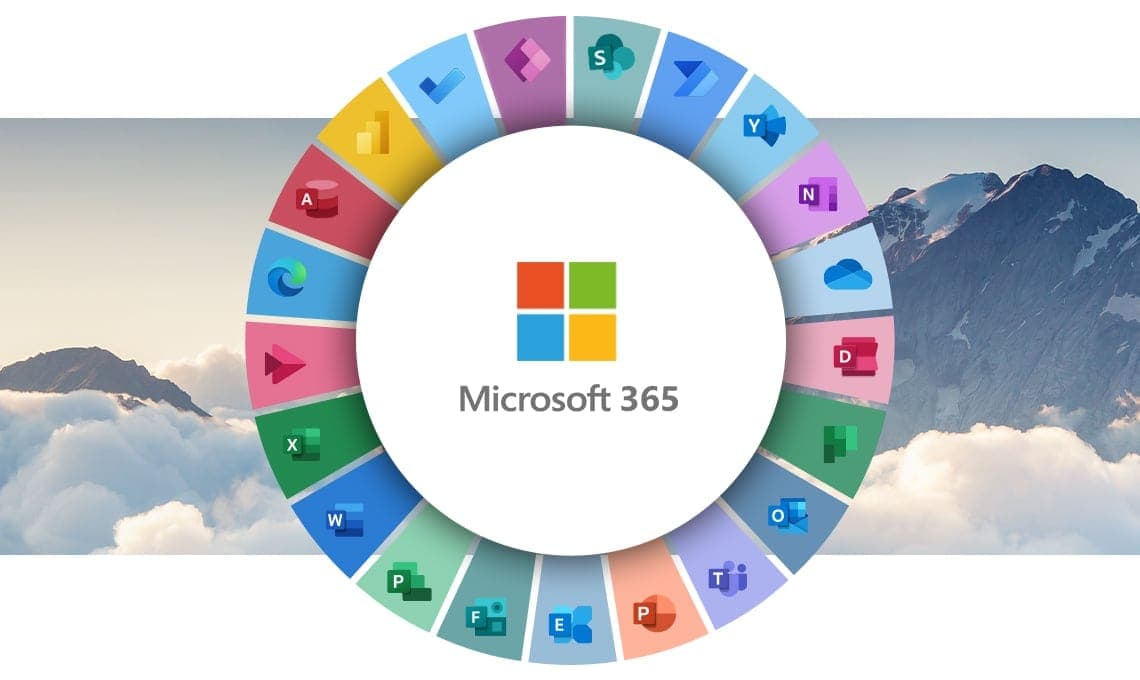
Whether you run on-premises Exchange servers or a cloud suite like Google Workspace, the case for moving to Microsoft 365 comes down to three things: productivity, security, and cost.
MICROSOFT 365CCloud Matrix IT/September 28, 2023/6 MIN READ
Whether your organization manages on-premises Exchange servers or uses a cloud-based platform like Google Workspace, there are numerous advantages to making the switch to Microsoft 365. As a Microsoft Partner and developer, Cloud Matrix IT helps businesses migrate into and build within the M365 ecosystem: easy and intuitive to use, secure, and extremely powerful.
// 01First, a Note on Naming
For most plans, Office 365 has been rebranded as Microsoft 365, though the E3 and E5 licenses remain under the Office 365 umbrella. In simpler terms, small and medium-sized businesses typically opt for Microsoft 365, while larger enterprises favor Office 365, which can still be integrated into advanced Microsoft 365 setups. We almost always suggest investing in Microsoft 365, as you gain many more advantages over the Office-only option.
Either way, Microsoft's cloud service is now adopted by over a million companies and still growing, with FY22 Q2 earnings reporting 19% growth in Office 365 Commercial revenue. The post-pandemic shift to remote work pushed previously reluctant adopters to embrace the cloud. The benefits of transitioning fall into three main areas: end-user productivity, security and compliance, and scalability with cost-efficiency.
// 02Benefits for End-Users
One of the driving forces behind M365 adoption is the improved communication offered by Microsoft Teams. Teams becomes your central workplace hub for meetings and messaging, often reducing internal email traffic, where the Google equivalent splits this across two platforms (Meet and Chat). Migrations from Slack to Teams are also gaining popularity as organizations consolidate data and maximize their cloud investment.
Beyond Teams, cloud connectivity unlocks a set of everyday productivity gains:
01
Mobility
Access applications remotely from any device and switch seamlessly between desktop and mobile. Work offline and your files automatically sync across devices once you are back online, which is especially handy for joining Teams meetings on the go.
02
Real-time collaboration
OneDrive for Business lets multiple users edit a single document simultaneously instead of emailing new versions around. Secure links can be shared with external contributors so everyone stays on the same page without losing track.
03
New solutions
Beyond the traditional Office apps, the cloud portfolio adds Planner, Editor, Forms, Power BI, and more. Keeping content inside the Microsoft ecosystem introduces new ways of working and reduces the risk of shadow IT.
04
Resiliency
If a device fails, cloud access to all email, files, and apps eases business continuity. Users can keep working on a phone or tablet, then log in to a new laptop and have all their data and settings back within minutes.
These collaborative tools also streamline IT operations. Updates are automated, compatibility issues disappear, and the service essentially requires no maintenance. Microsoft handles the heavy lifting to keep your SaaS in optimal condition, freeing administrators to focus on more critical work like security monitoring.
// 03Security and Compliance Benefits
Recent years have seen several high-profile incidents targeting on-premises Exchange servers, like the notorious HAFNIUM breach and the ransomware attacks that followed. Patch management is crucial on-premises, but many organizations fail to act promptly: after Microsoft released cumulative patches for HAFNIUM, a scan of 100,000 servers found 30% still unpatched five months later. One of the primary benefits of M365 is automatic patch deployment, keeping your network fortified without relying on administrator vigilance.
The Microsoft cloud provides layered protection through:
01
Threat protection
The Defender portal's anti-phishing features identify emails carrying malware and block delivery, reducing the risk of zero-day exploits through a prevention, detection, and remediation model.
02
Privacy controls
Block access from unsecured Wi-Fi, set expiration dates on externally shared links, encrypt data at rest and in transit, and remotely wipe content from lost or stolen devices.
03
Automatic MFA
Default security settings make it easy to enforce multi-factor authentication, greatly strengthening defenses against brute-force attacks, with advanced conditional access policies available too.
04
Information governance
Apply sensitivity labels to users, groups, or content, and restrict forwarding, printing, copying, and pasting to protect confidential information. Multi-geo data residency is available across global data centers.
On compliance, the risks tied to PST files are well documented, and meeting regulations like GDPR and CPRA becomes nearly impossible when they litter your environment. Microsoft 365's virtually unlimited mailbox storage removes the need for PST files entirely. Centralizing that data simplifies compliance, reduces breach risk, and relieves administrators from constantly repairing corrupt files, so identifying and migrating PST files should be part of any move to the cloud.
// 04The Business and Cost Case
Financial constraints can delay digital transformation, and many organizations fall into a sunk-cost fallacy, sticking with on-premises infrastructure because of past investment, even when migrating would save money. The numbers tend to favor the move: a Forrester Total Economic Impact study indicated a 135% return within three years.
When weighing the business benefits of migrating, consider:
01
Retiring legacy platforms
Moving off on-premises networks reduces server and energy expenses and eliminates ongoing maintenance, a real advantage as the specialized knowledge legacy systems require grows scarce.
02
Scalability
Subscriptions give you cost certainty. Budget accurately, tailor plans per group, and instantly add or remove licenses as needs change, which is ideal for rapid growth or seasonal swings. For what you get, it is extremely competitive.
03
Support
As Microsoft phases out support for legacy Exchange servers, migration becomes a matter of when, not if. Support for Exchange 2013 ended in 2023, leaving it more exposed as Microsoft's focus shifts to the cloud.
04
Data centralization
With virtually limitless storage, it is now viable to bring archive data home to Microsoft instead of third-party platforms. One global cosmetics company estimated an 800% ROI by moving its email archives to Microsoft 365.
”
// THE BOTTOM LINE
“Flexible work, stronger security, and a healthier bottom line. As Microsoft clears the path to retire Exchange servers, cloud adoption will only keep rising. We have only scratched the surface here.”
Microsoft has also committed to becoming carbon negative and zero waste by 2030. If your corporate social responsibility goals align with those efforts, that can be one more point in favor of the move. If you want to explore growing your business with the cloud, or you are already in M365 but want to use everything you are paying for, reach out for a chat.
Cloud Matrix IT is a managed IT and technology consulting firm specializing in proactive IT management for small and medium-sized businesses. IT PROTECT is a comprehensive technology strategy and cybersecurity platform that helps your business save time, reduce costs, and stay protected with a fully managed 24/7/365 SOC+ platform led by cybersecurity professionals. Yes, even weekends and holidays.
// LET'S TALK
Tell us what you're working through.
Real conversations beat sales pitches, every time. Share what's on your plate and we'll be in touch to set up a chat, usually within a business day. No pressure, no pitch.